
Junior Achievement Dream Accelerator
A tablet app and interactives that guide high-school field trips through entrepreneurship, money, and future goals.
Overview
A field-trip learning center where high-school students explore entrepreneurship, money, and careers. Students arrive as a class and move in groups on a schedule, so the room works as one coordinated system.
G&A designed the end-to-end visitor journey for Junior Achievement's Dream Accelerator in Greenwood Village, Colorado: an orientation, four interactives, a tablet app that ties them together, and QR-based takeaways students keep after the visit.
I led UX on three of the four interactives (Entrepreneurial Mindset, Reality Check, and Visualization) and on the app that ties the room together.
How a visit works
The schedule shaped every screen.
- Timed rotations. After orientation and a short film, groups rotate through the activities, about ten minutes at each.
- One tablet per group. The app guides each group to its next station, syncs with each interactive, and saves takeaways when students scan a QR code.
- Takeaways that travel. At the end of the visit, students get an email summary of everything they saved.
One app, three interactives
The app is the thread. Each interactive is a self-contained activity that hands its result back to the app.
An app that runs the room
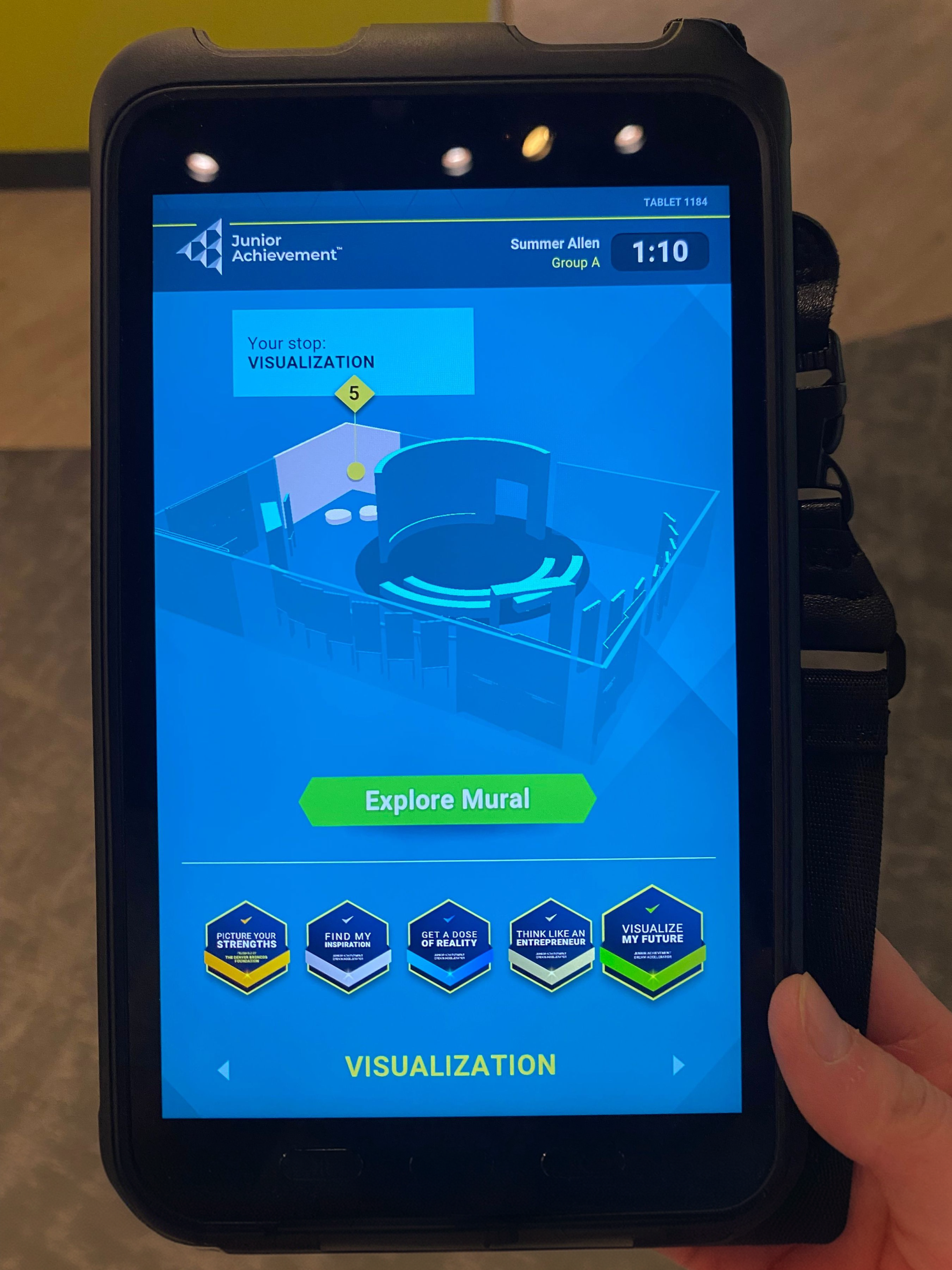
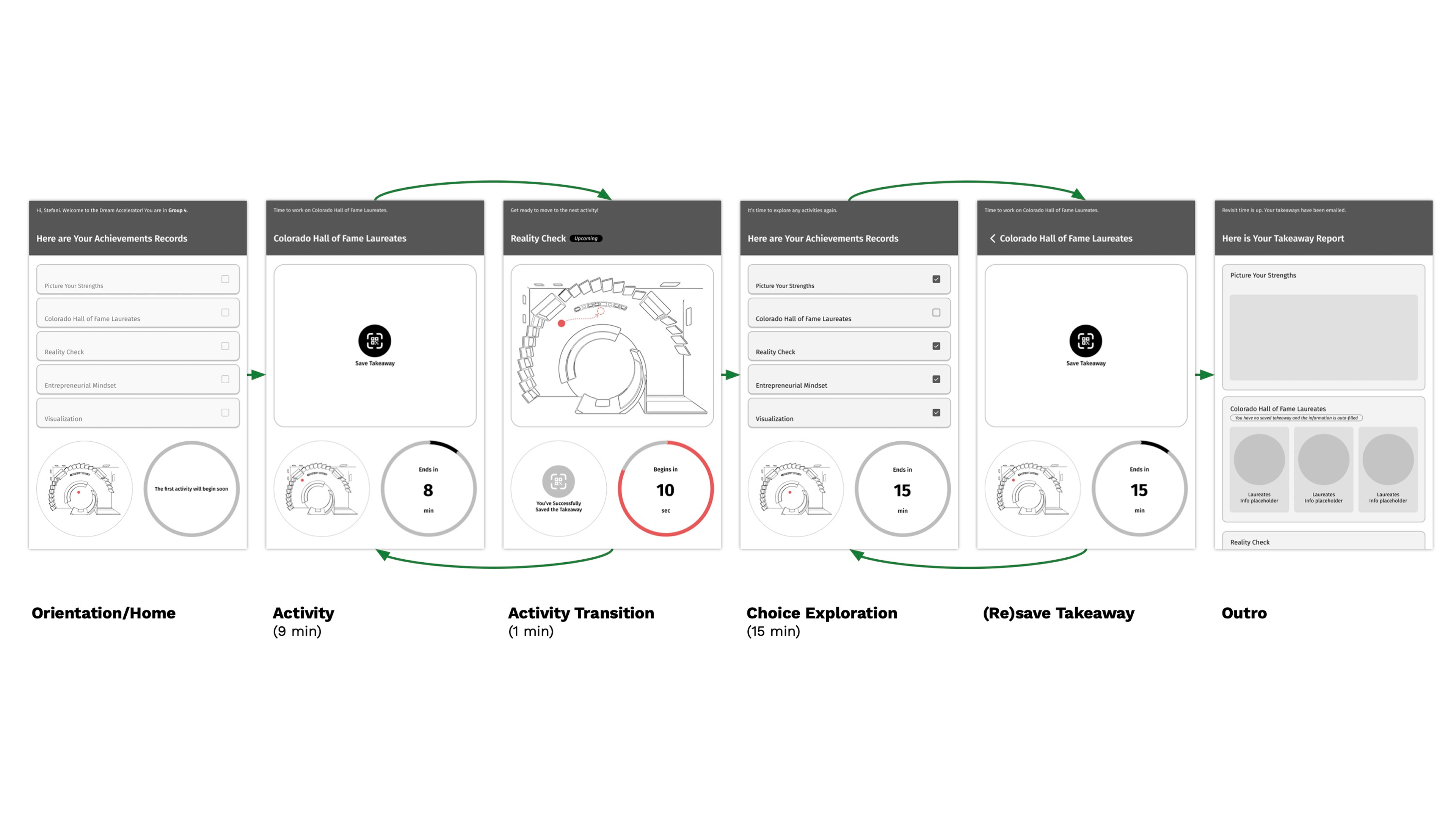
The app shows each group where to go next, warns them a minute before time is up, and saves takeaways when they scan a QR code at a station. Staff use an admin view to set up groups, start activities, and track progress. I defined the user flow, wireframes, and the integration requirements that let the app work with every other interactive.
Choices with consequences
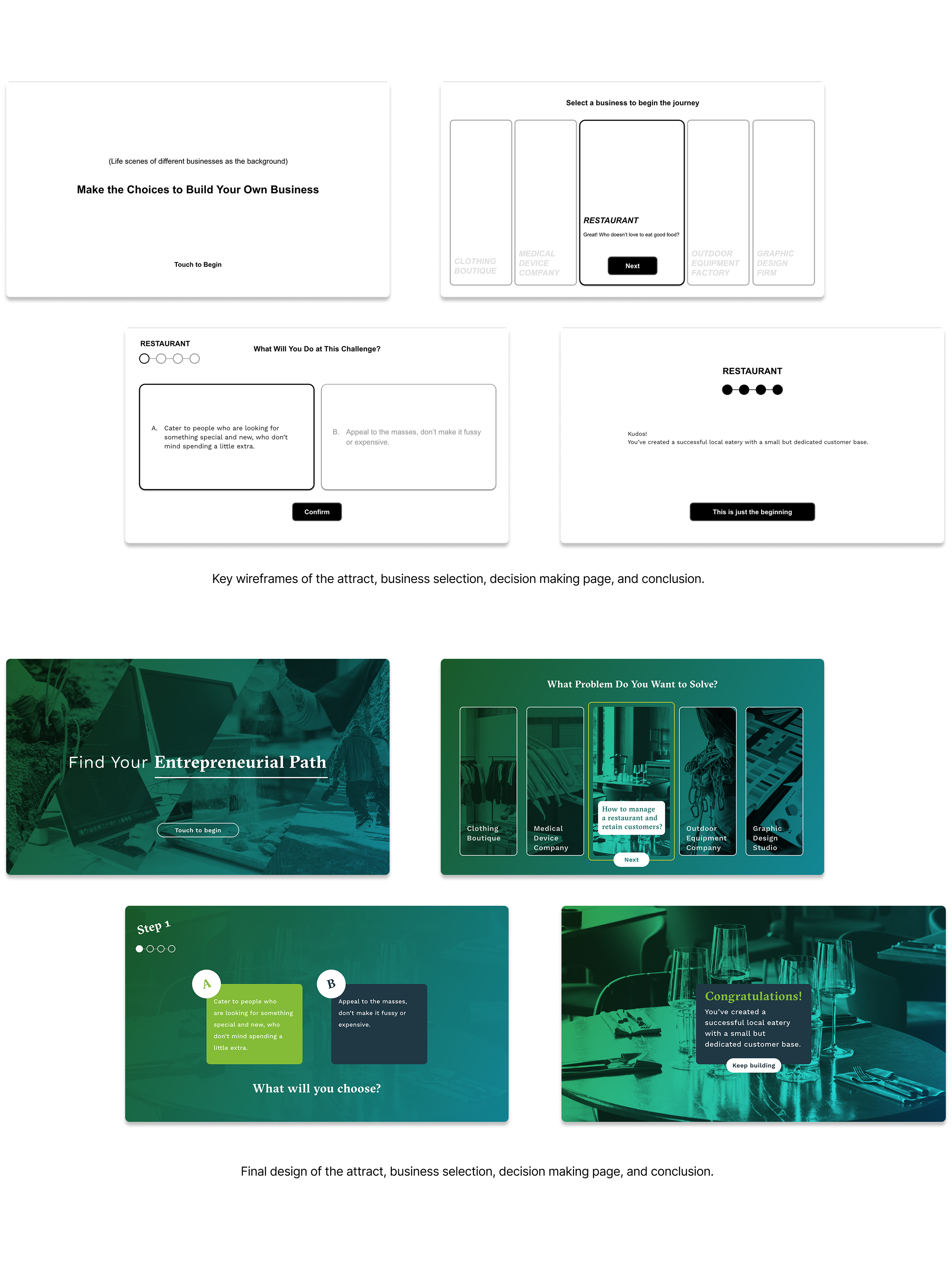
Students pick a business to run, such as a restaurant, a clothing boutique, or a medical device company, then face a series of challenges with two options each. Their choices add up to one of three outcomes, followed by the story of a real Colorado business. I defined the flow, the wireframes, and the sync with the app. Visual designers built the final screens directly from my wireframes.
Trade-offs, not advice
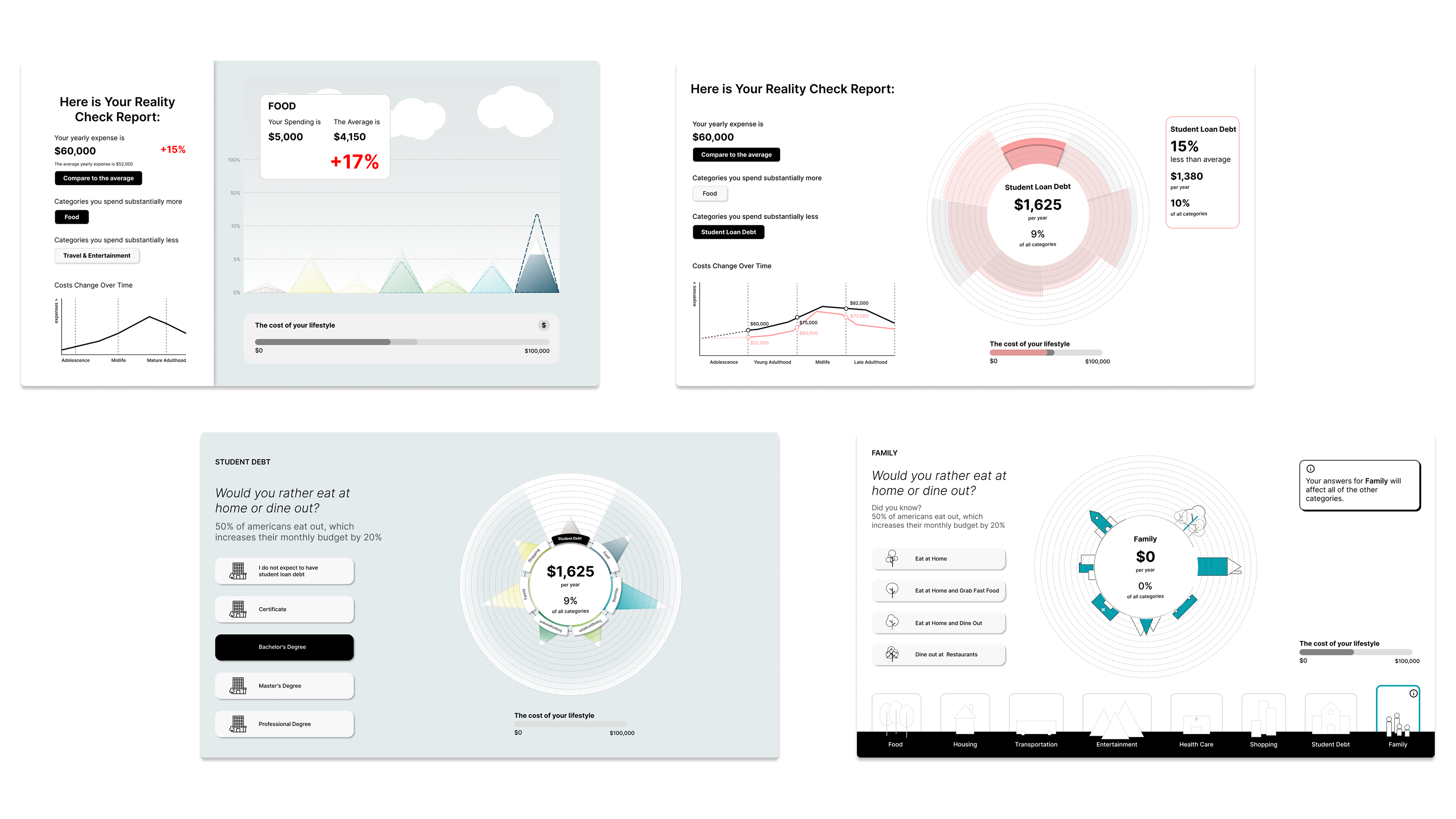
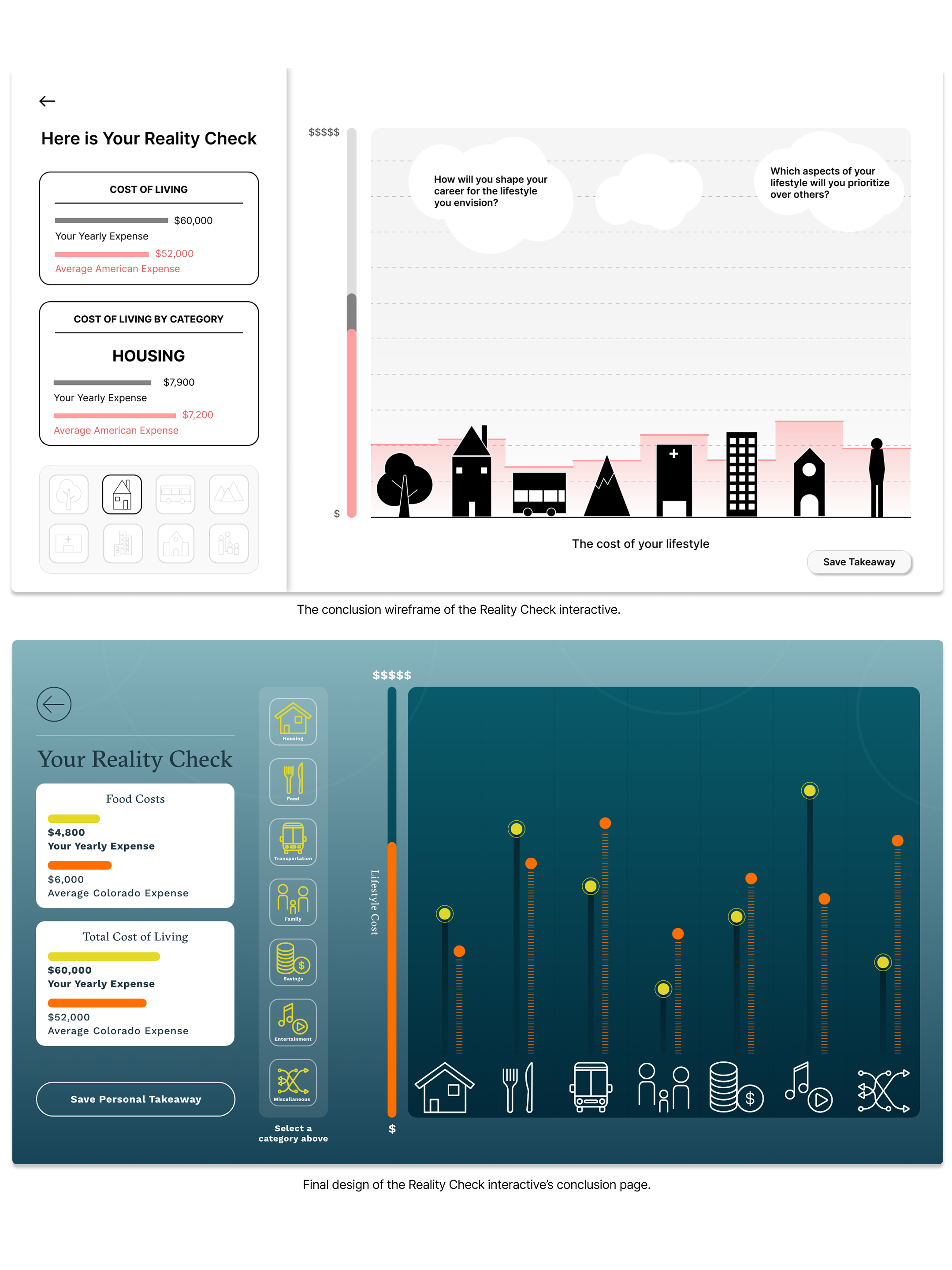
Students build a future lifestyle across eight categories, from housing and food to transportation and family. Pop-up questions make them weigh each choice, and a cost-of-living chart updates in real time. The summary compares their total with the average and saves to their profile. I ran several rounds of wireframes so the numbers would read clearly to teens who aren't used to them.
AR that links the wall to the tablet
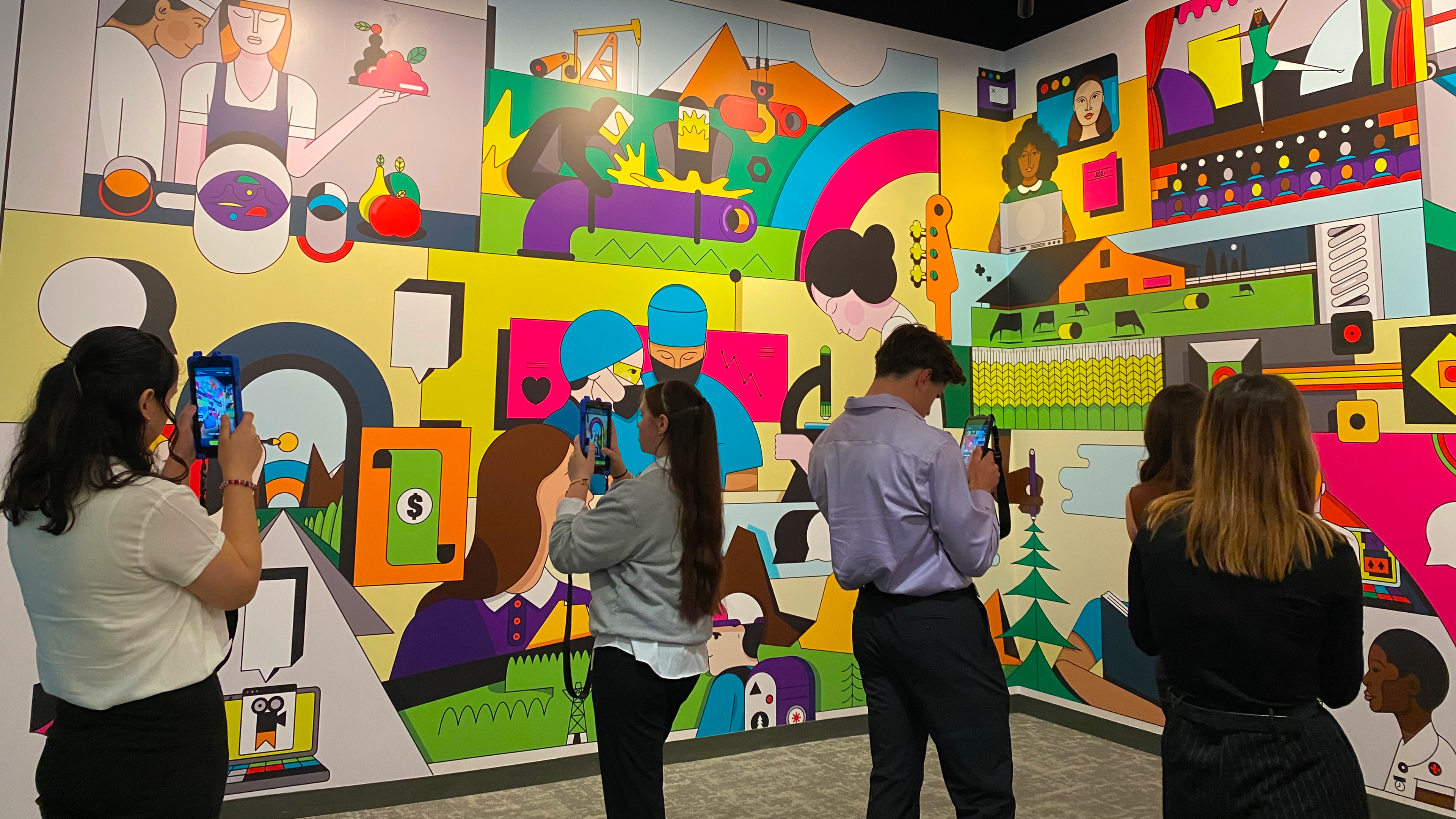
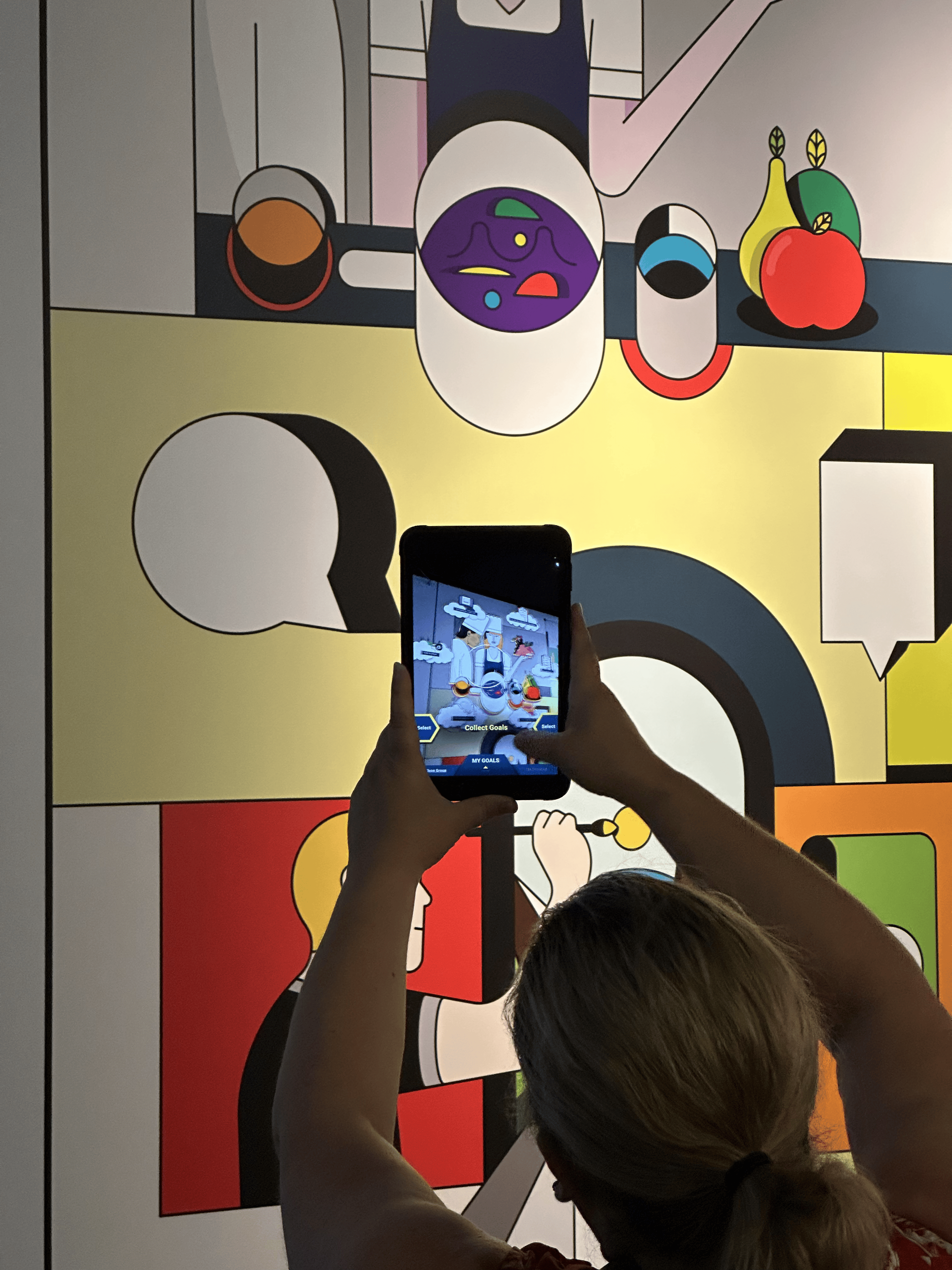
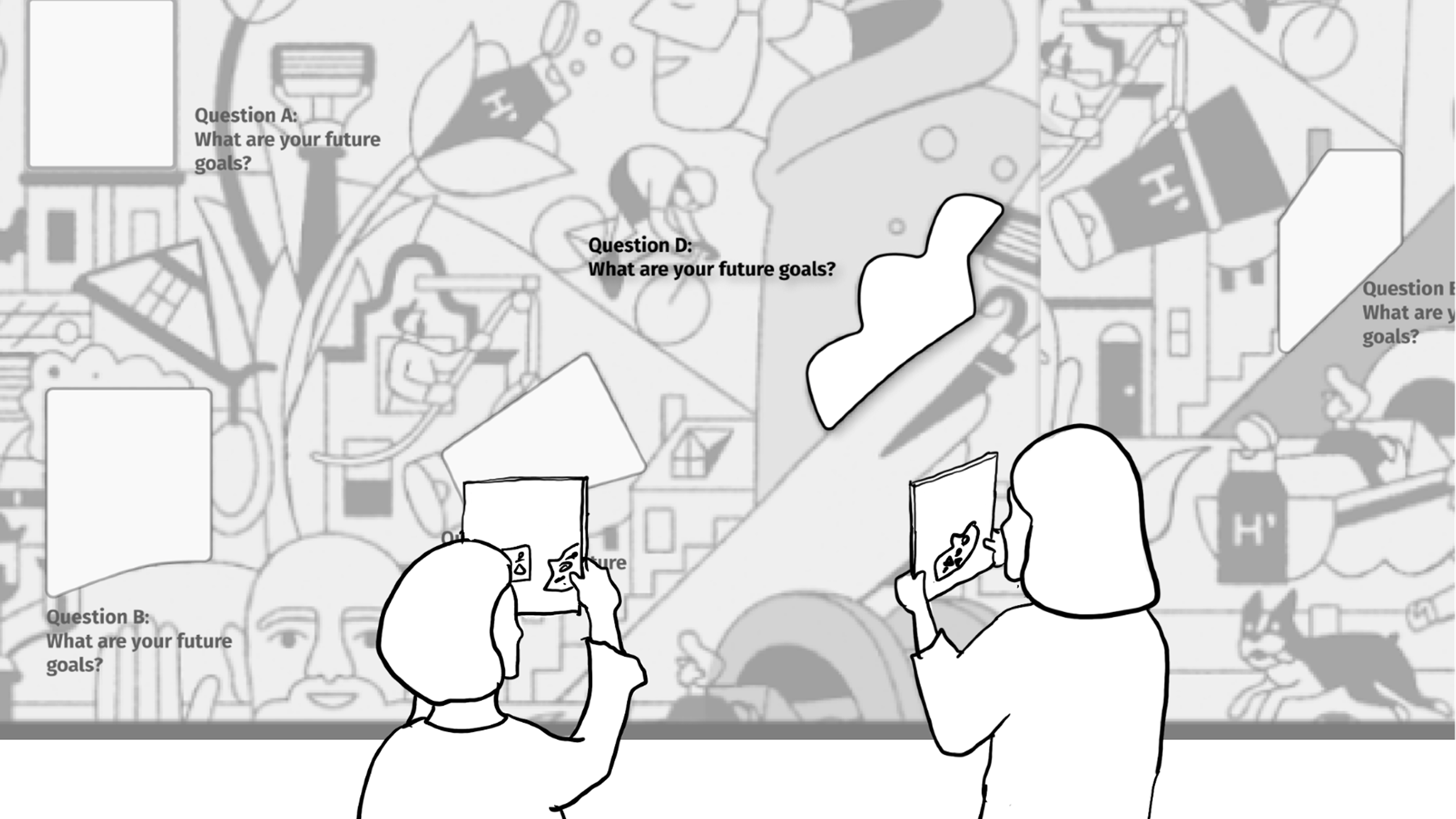
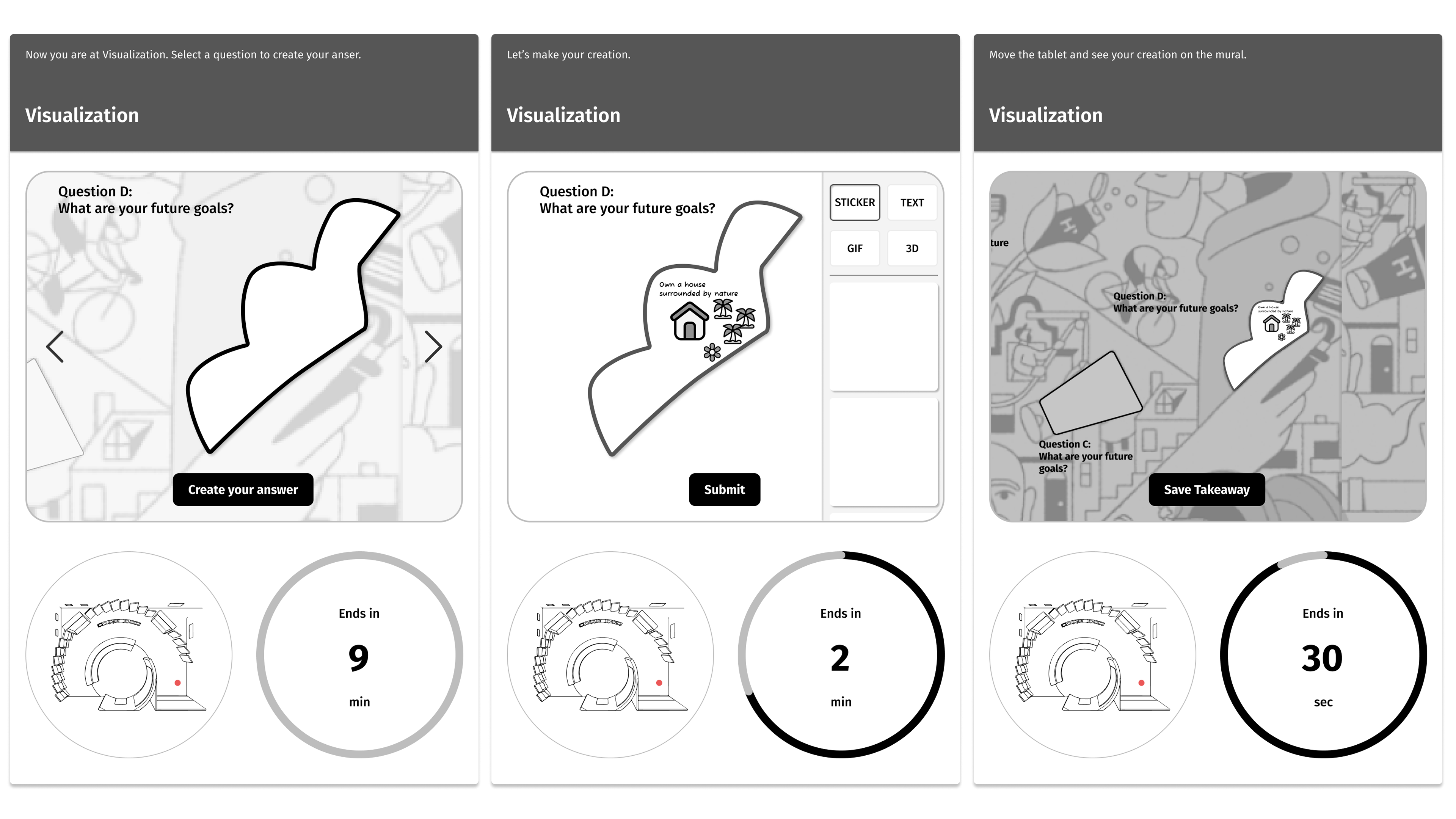
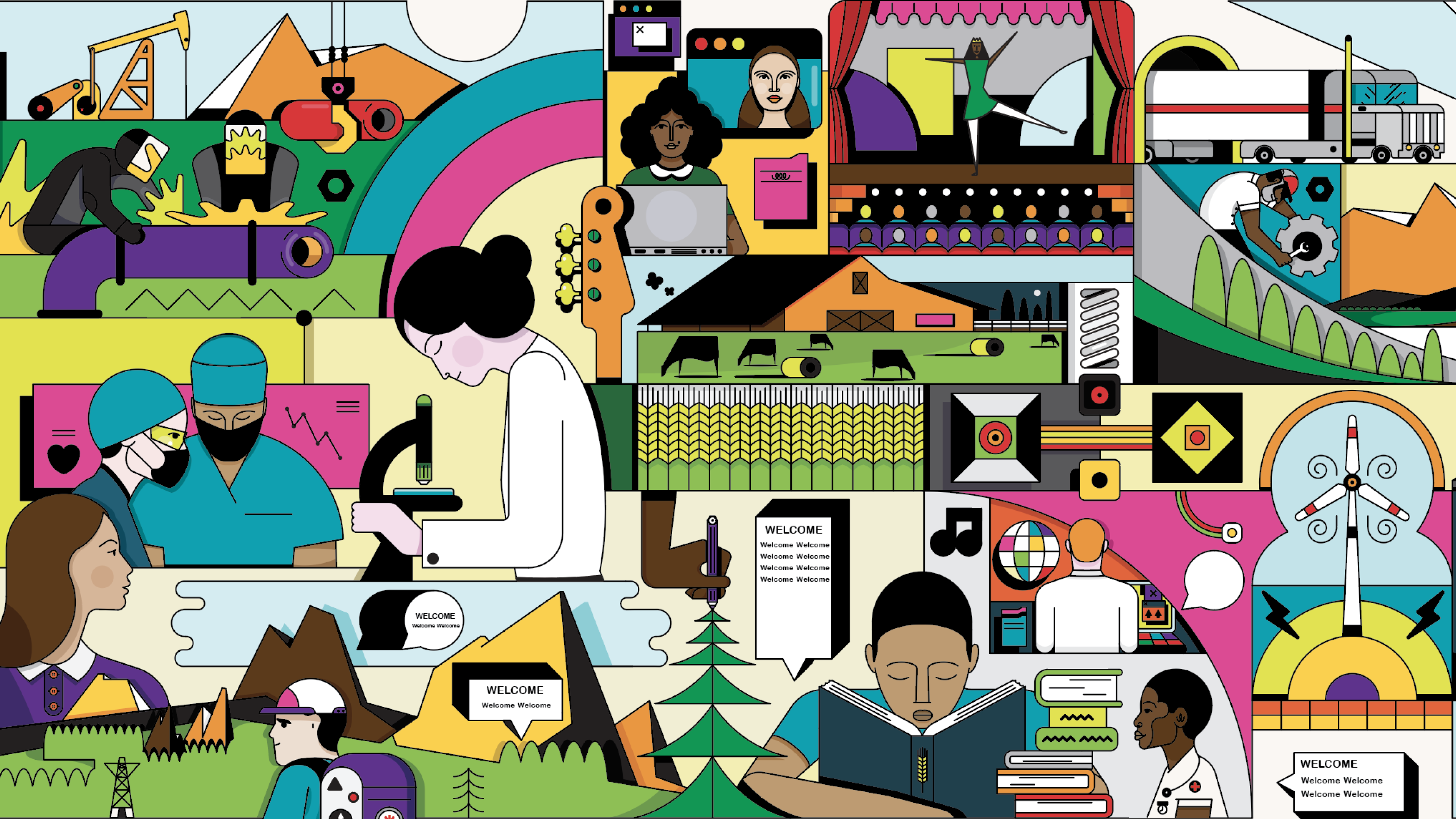
I redesigned this piece around AR. Students scan a shape on a large illustrated mural, answer a question about their future by composing stickers, text, and animated icons, then hold up the tablet to see the whole group's creations on the wall. The virtual mural becomes their takeaway. I worked with illustrator Jamie Cullen to make sure the mural could support the AR concept.
Process
Most of the work happened before visual design: flows, wireframes, and the integration rules that let every piece talk to the app.
Outcome
The Daniels Fund JA Dream Accelerator hosts high-school field trips in Greenwood Village, Colorado.
In 2024, the program appeared in national coverage of Gen Z's interest in entrepreneurship.